
Challenge
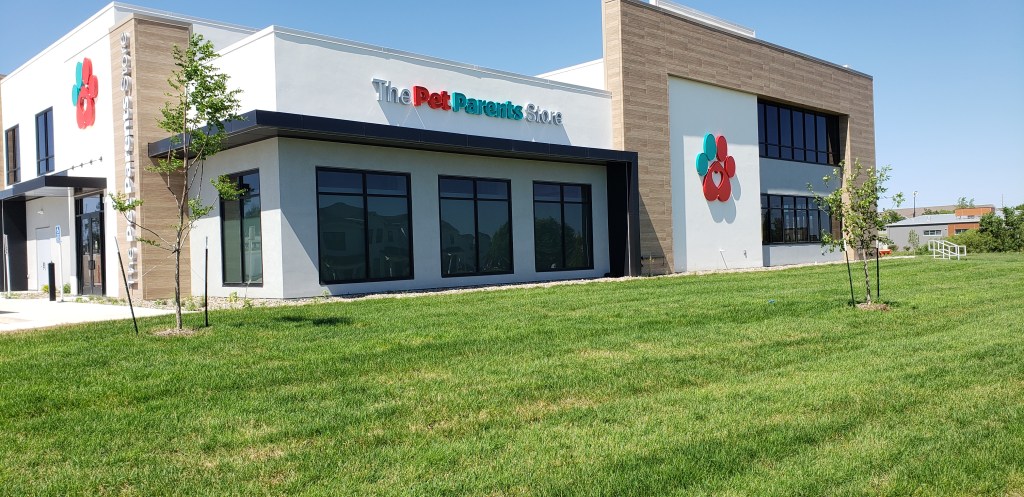
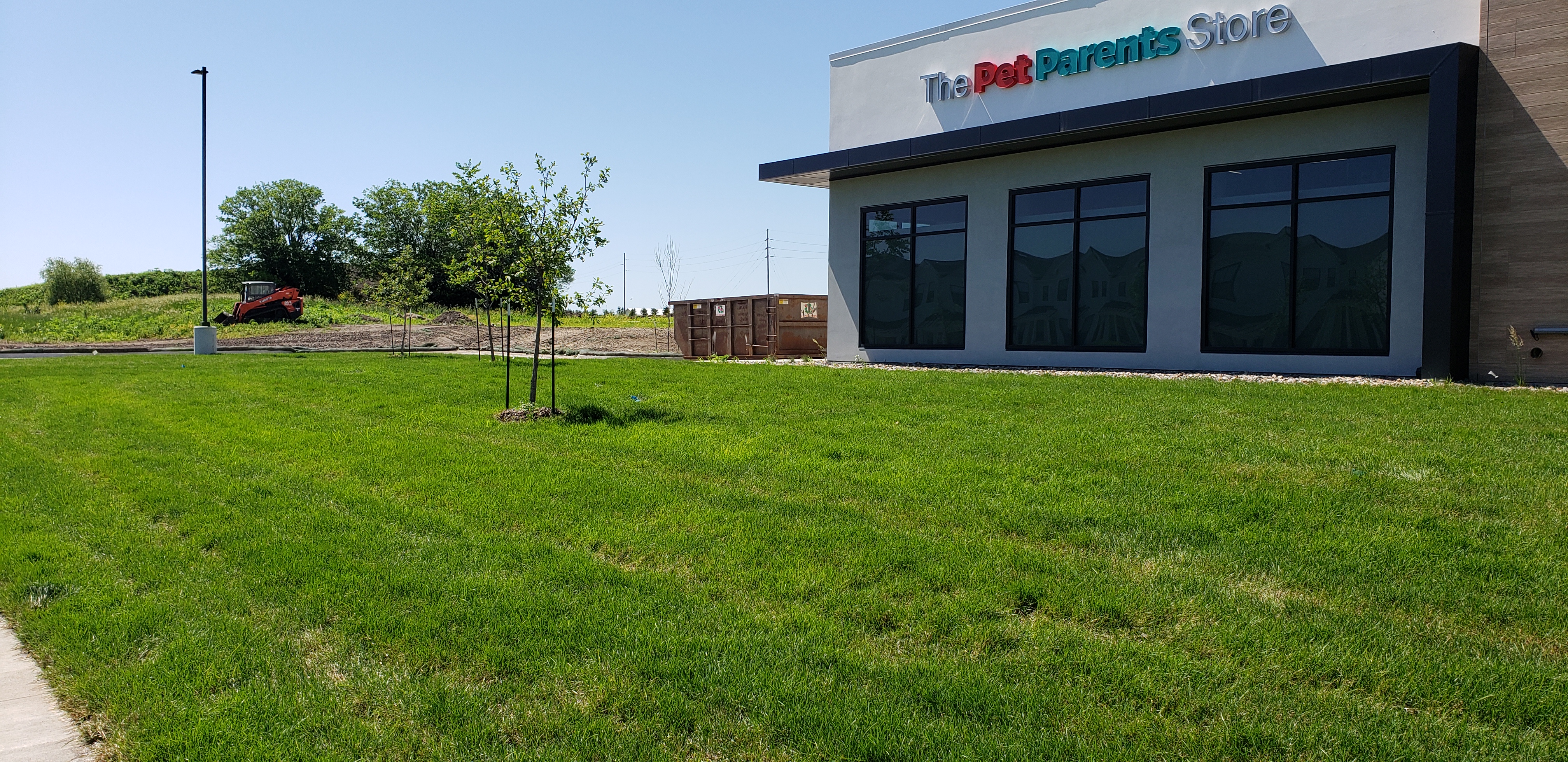
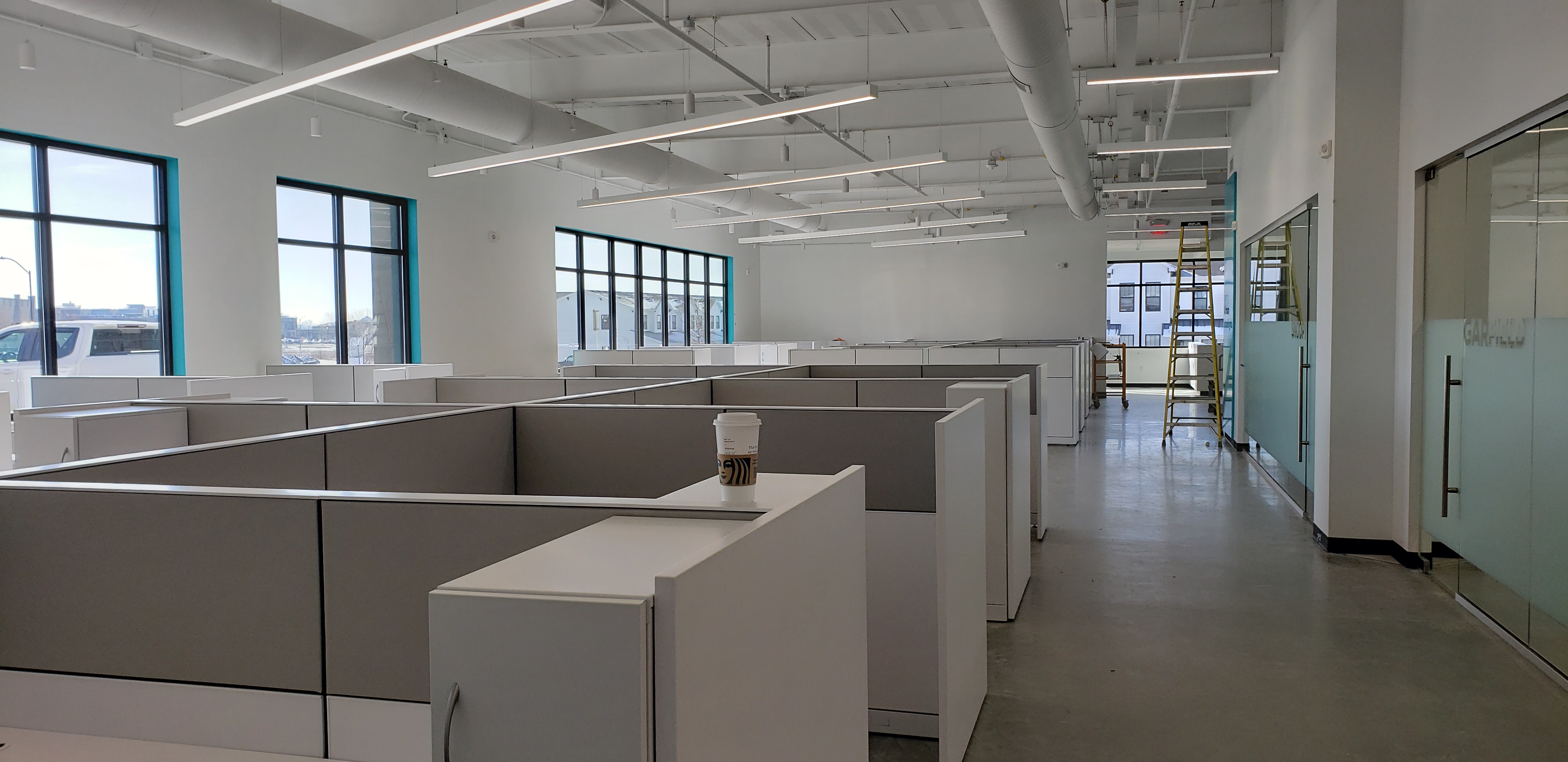
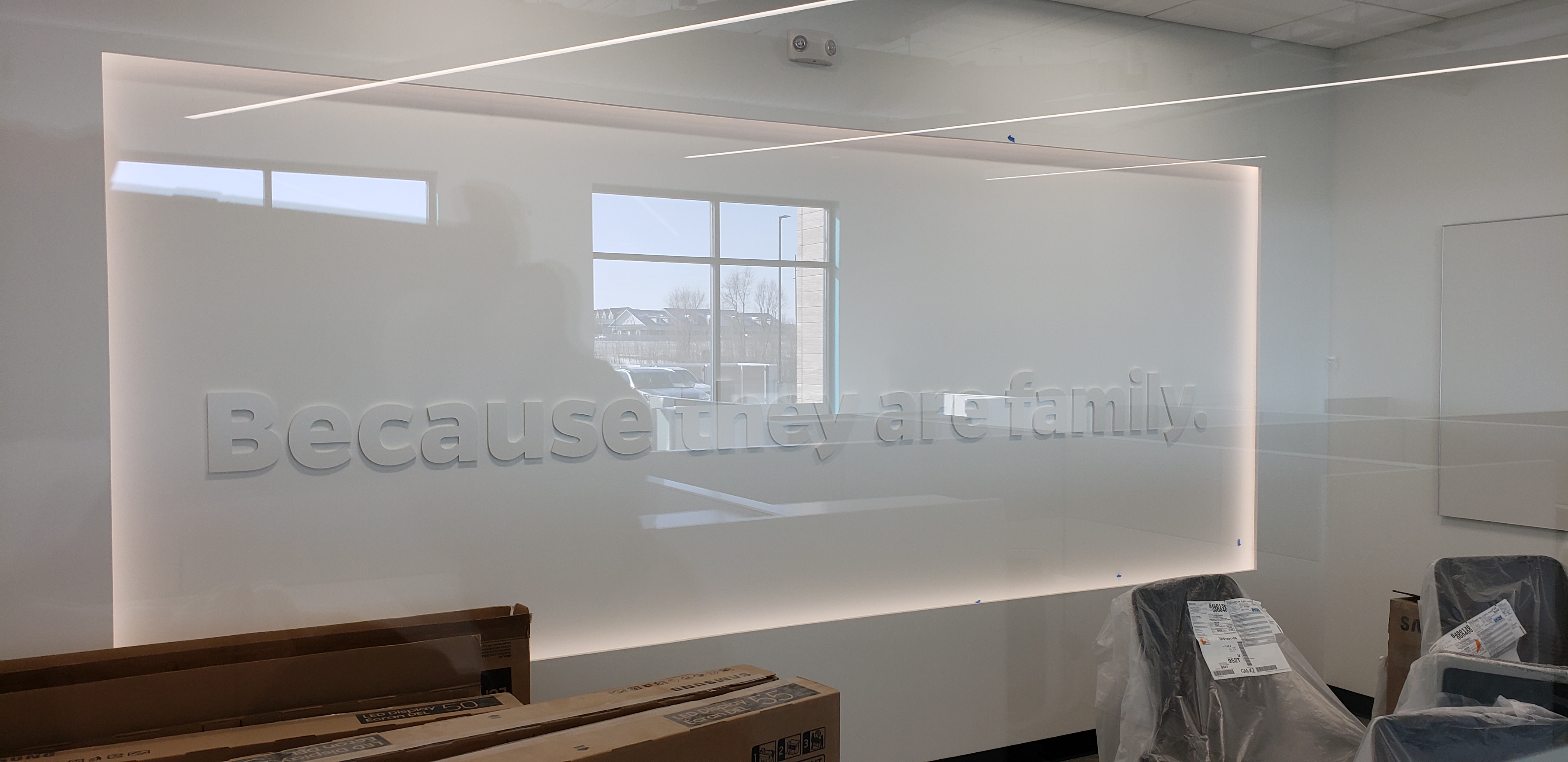
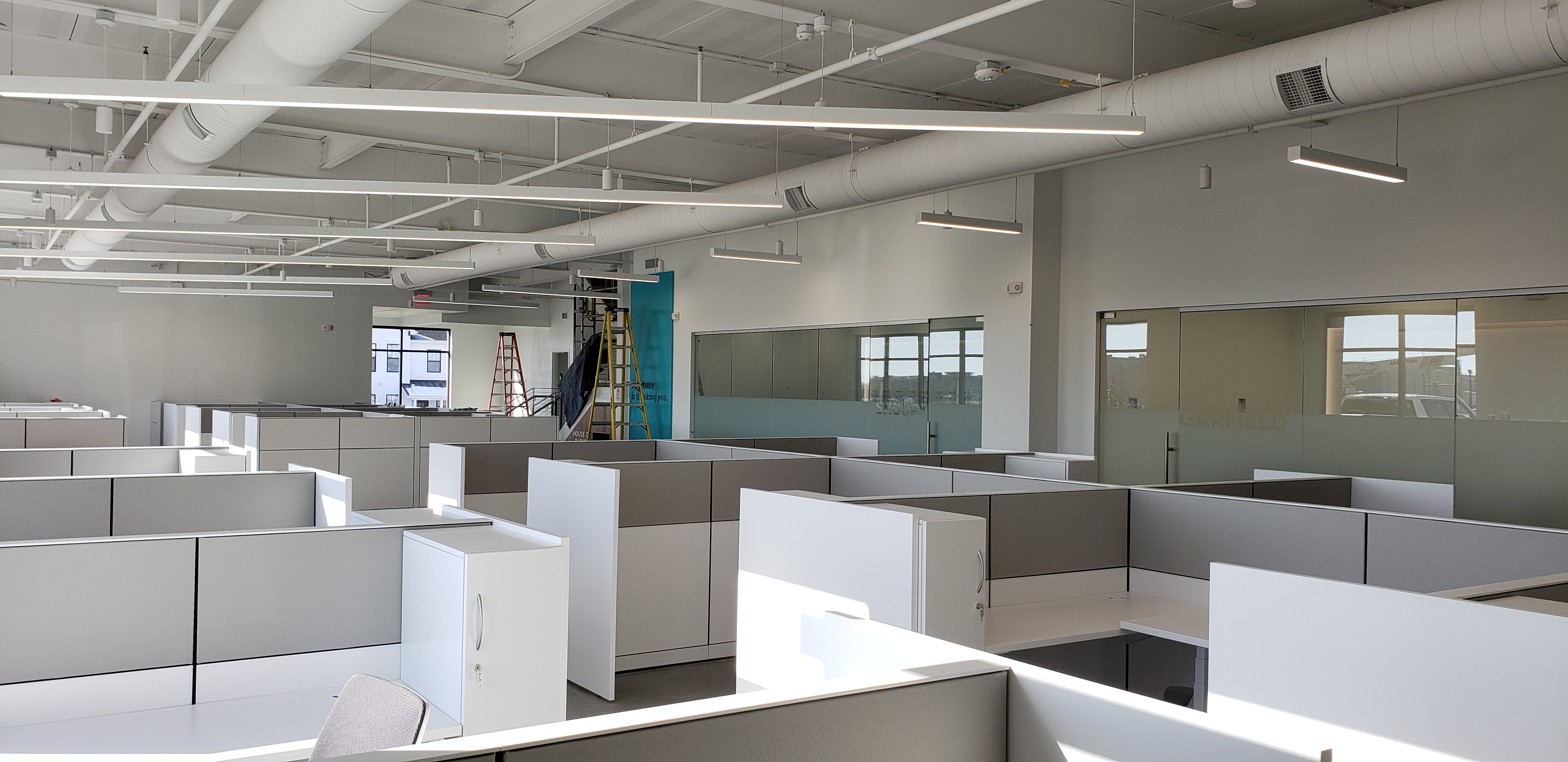
Where to start?! One could say that the challenge was to build an entire office and retail space that would become the bedrock for future sites, testing, and the hub for all future operations before rollout. At the time of my tasking to help build out the space, the store and HQ were already in the process of being fit with drywall. Little did I know, this would make tasks considerably more challenging.
Retail Store
DISPLAYS
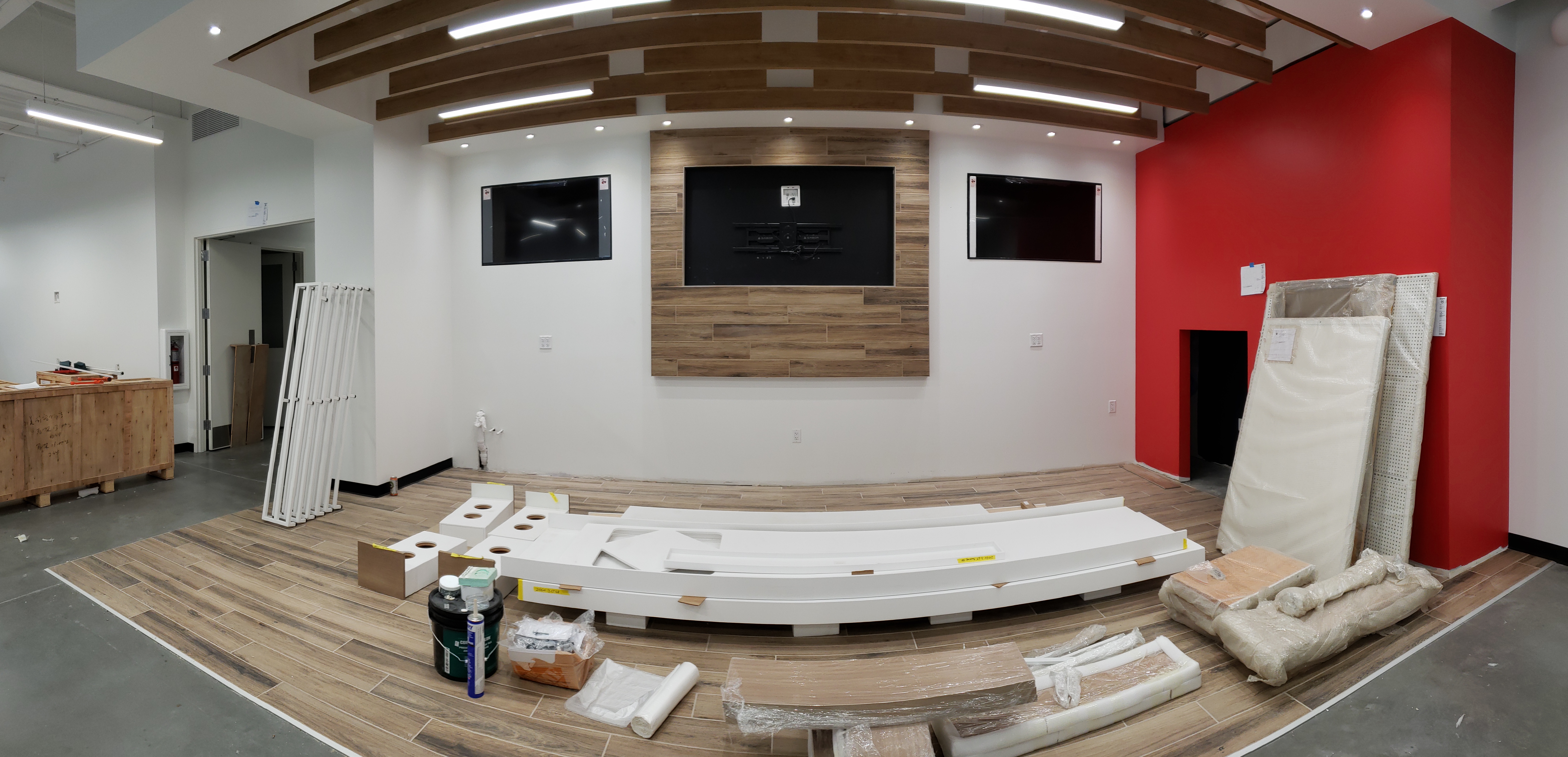
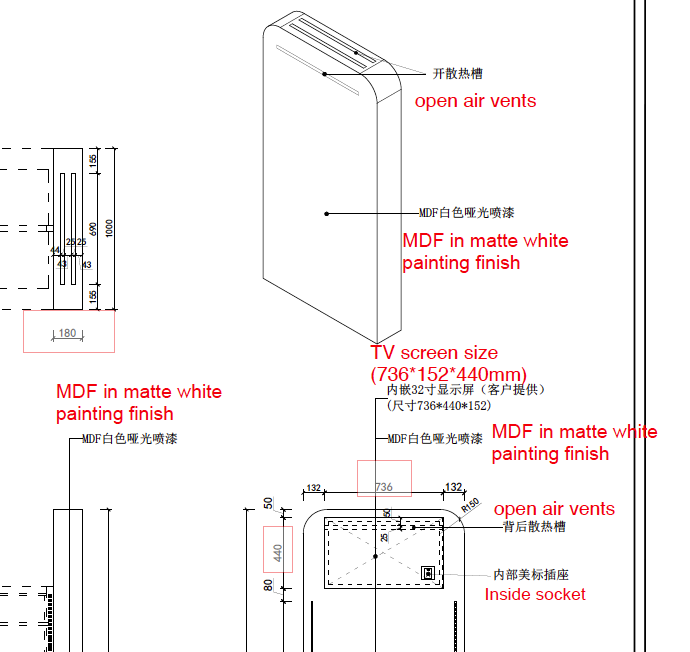
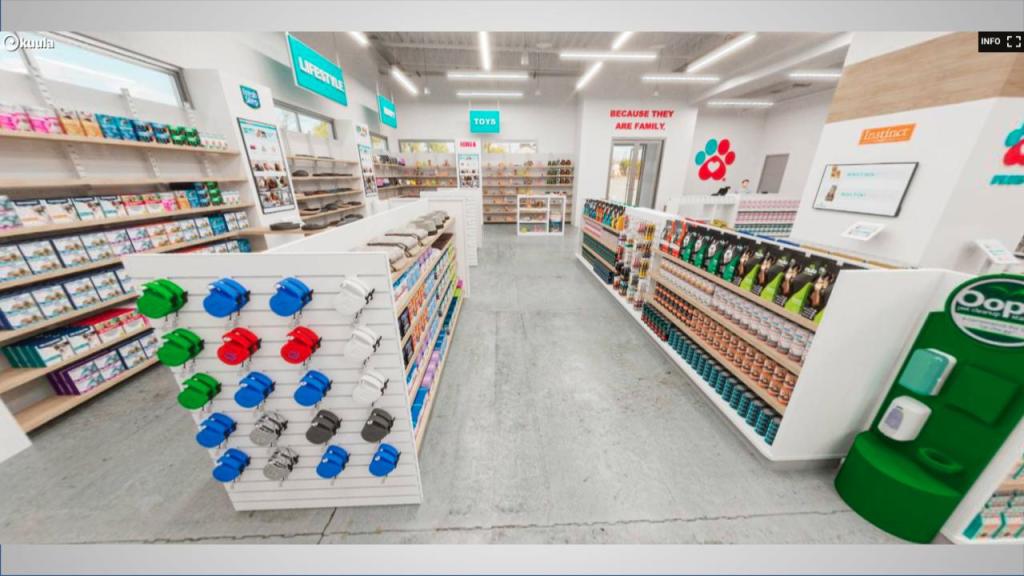
Specific commercial displays capable of running 16/7 were selected for each location, each with its own wireless content receiver capable of automatic updates through a third-party application. Below each display was a tablet which assisted guests in finding the correct product based off of their particular needs within the area they are searching within (healthy treats while shopping in the treats section, etc.), querying from our online store as to which would be best for them. Two tablets were also reserved for guests to schedule appointments for a self-service grooming spa.
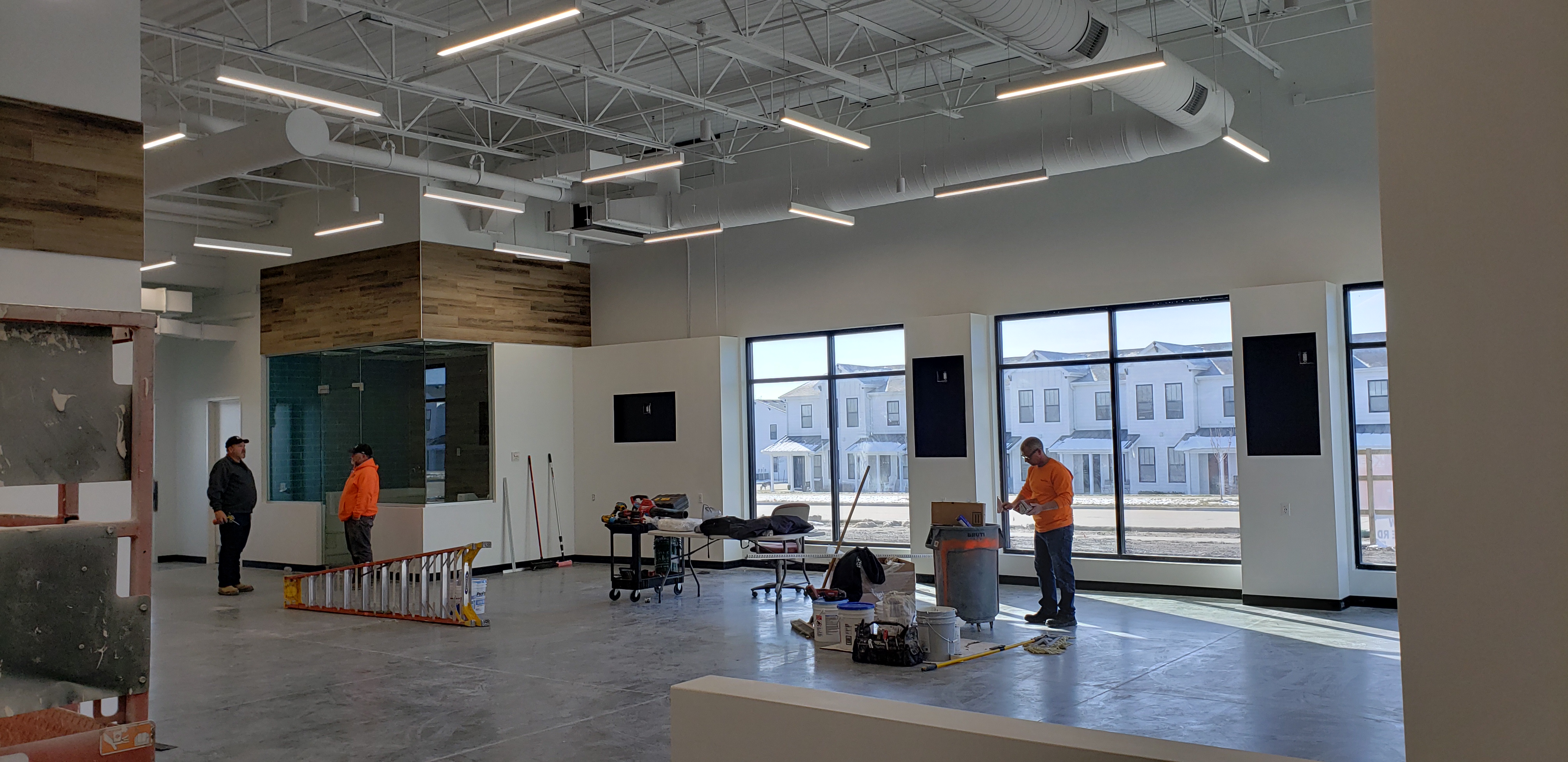
Although the results with the displays and software were solid, much of the work had to be gone back over again, as the initial planning team was not aware of how early the placement of things such as backing boards, conduit, and display mount locations needed to be. To be fair, neither did I when I was given the task.
SHELVING
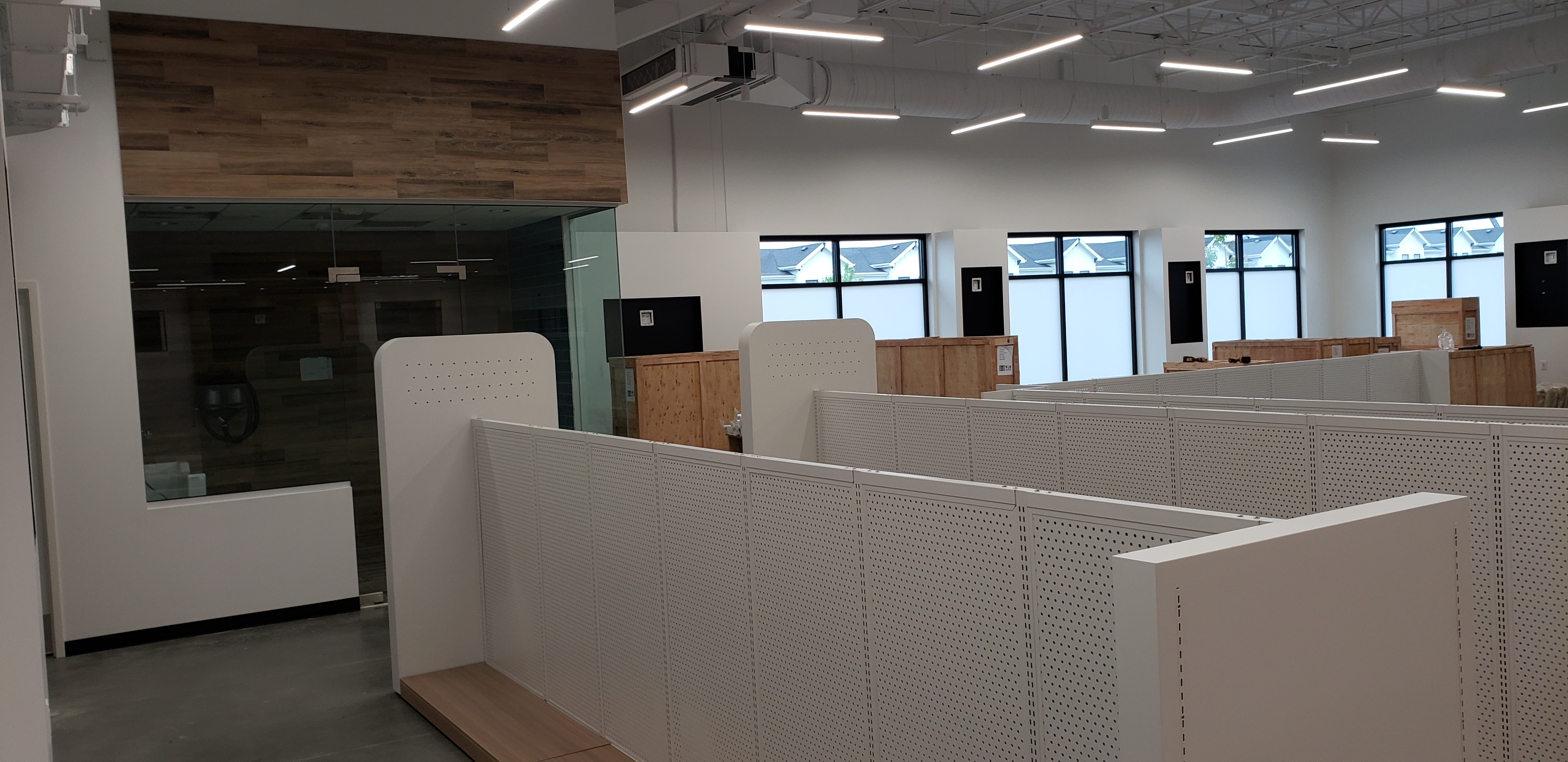
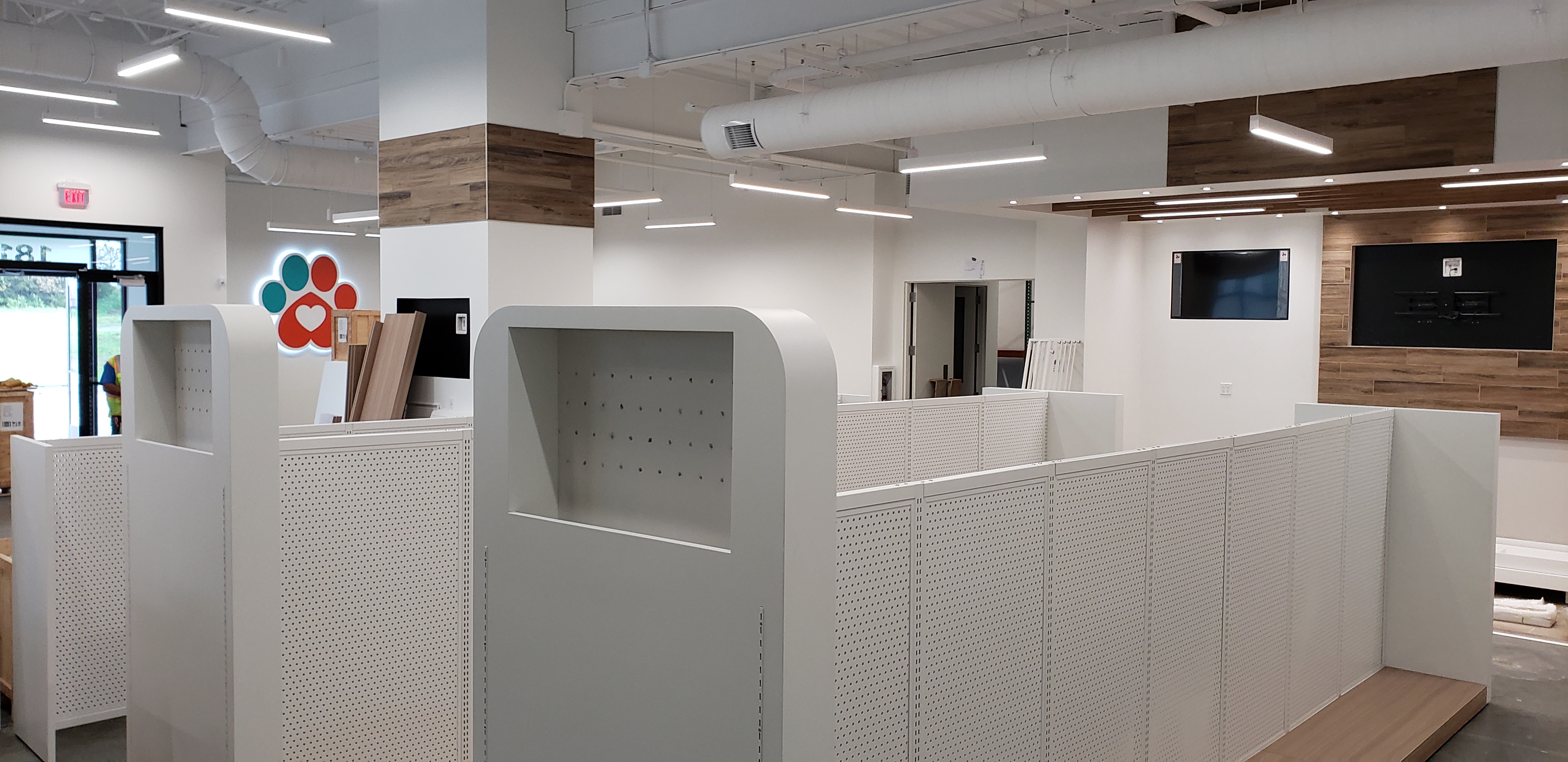
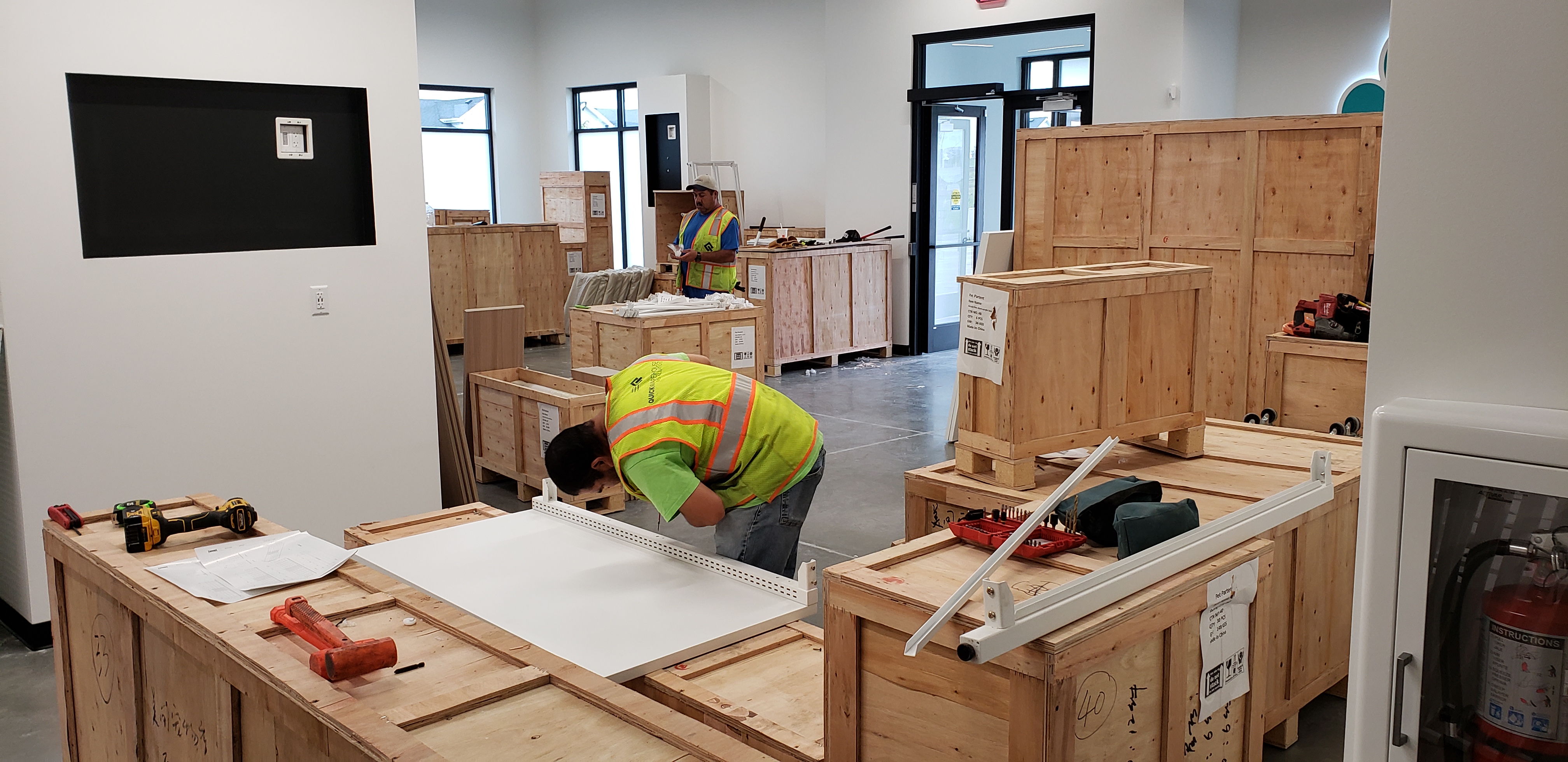
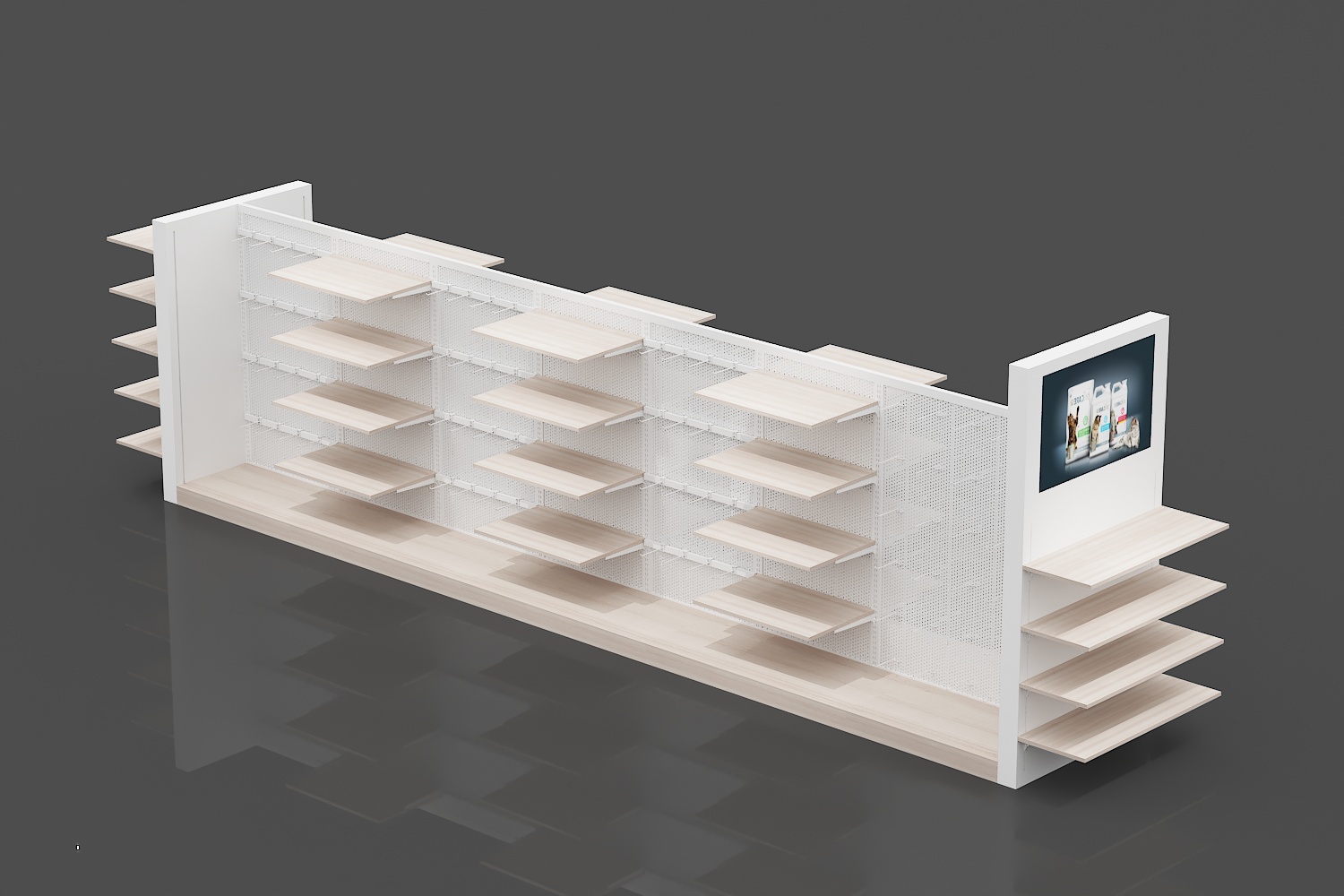
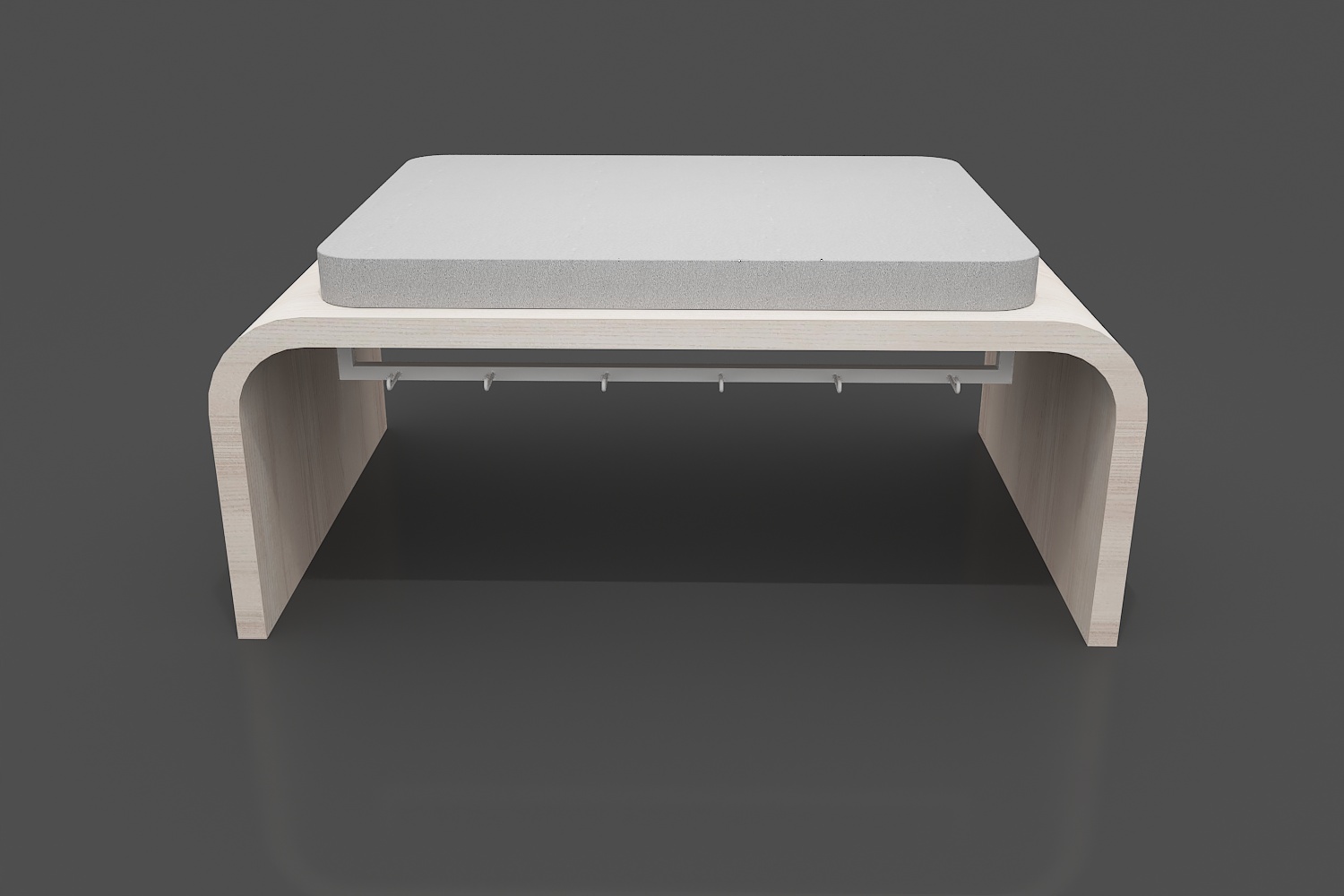
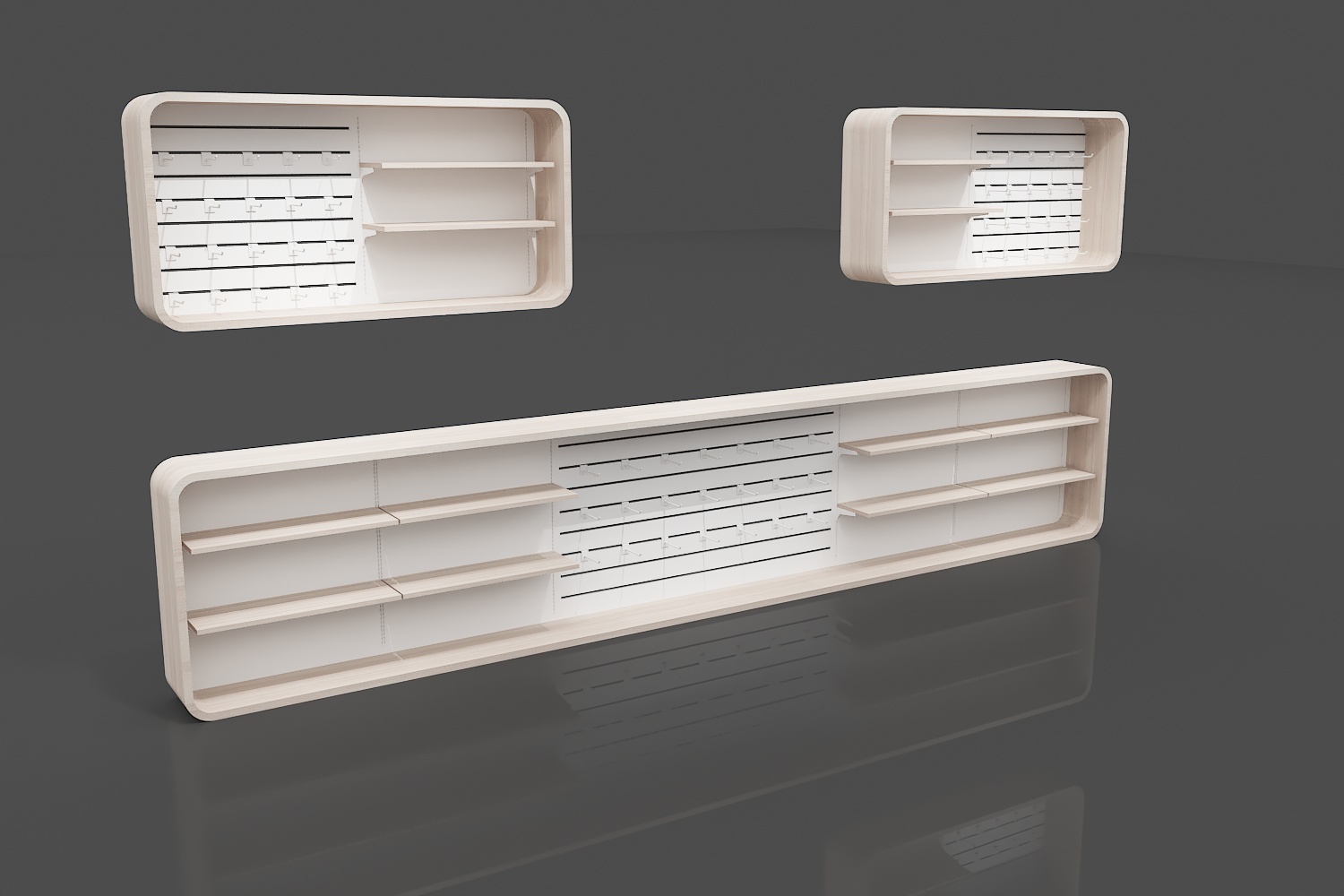
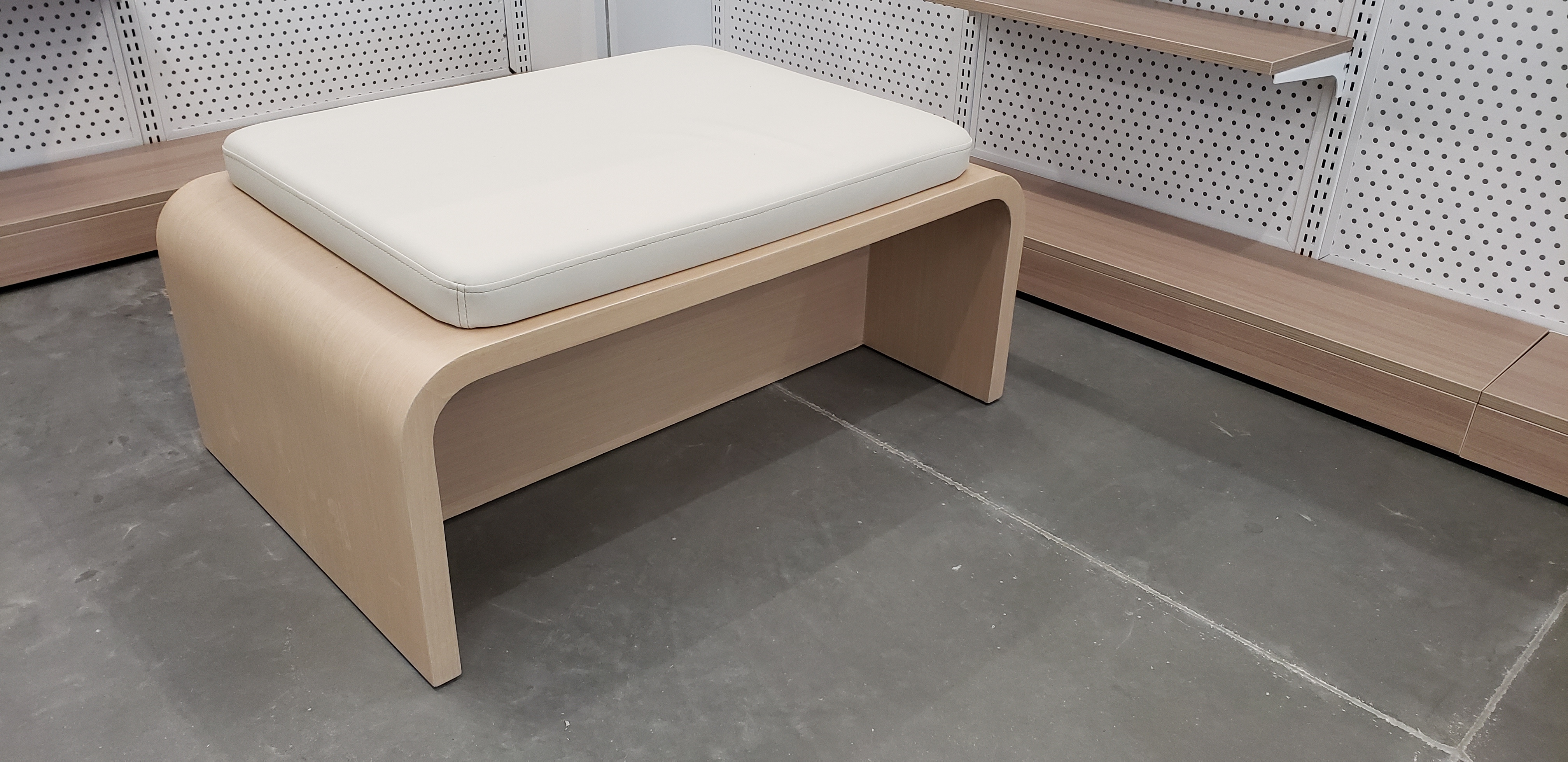
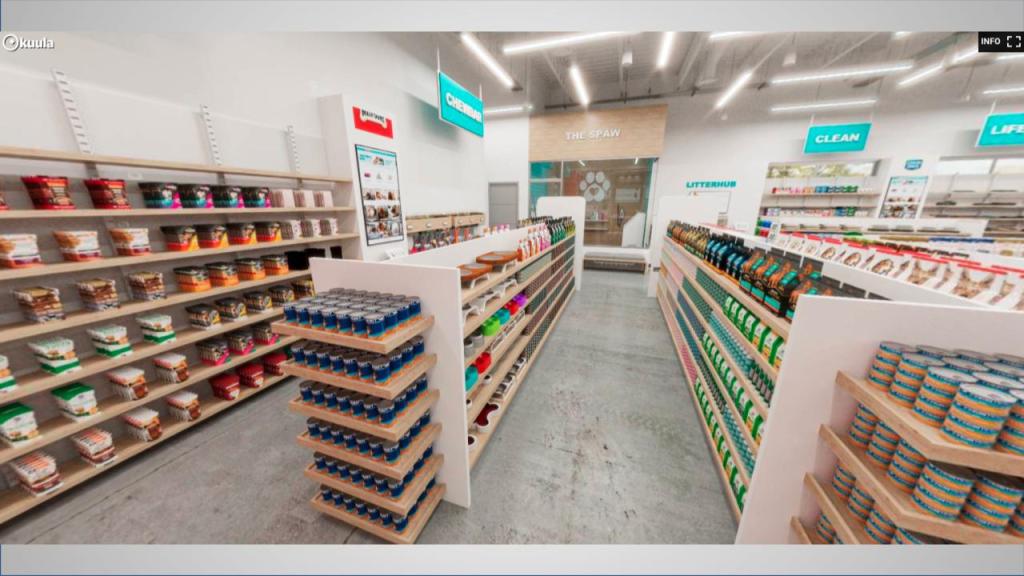
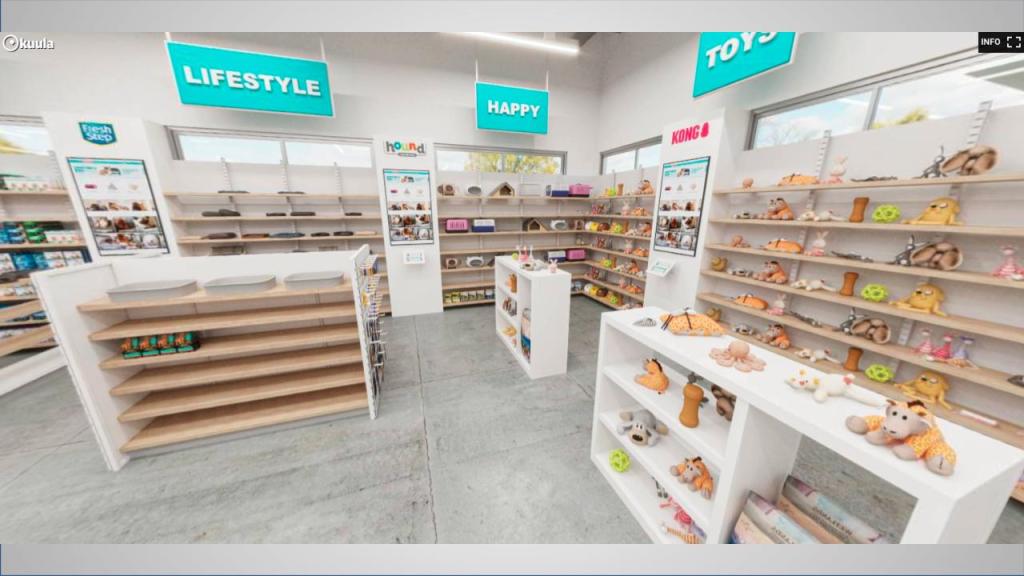
Store shelving was a massive challenge, as this was the first time I had direct contact and actionable tasks with overseas manufacturers. Endcaps were to house additional displays, hide wiring, and be of a specific color and wood accent type. The first set of endcaps were not to spec. Instead of immediately asking for another set that was to our desired spec, we waited and built out the rest of the store, checking to see if we could increase our list of needs to help lower costs and keep things within budget. Building the shelving was a massive challenge, requiring professional installation crews who specialized in retail shelving and spaces to mount and build the structures. The instructions were horrific, and yet, two men managed to build everything beyond our expectations!
STORE MARKETING
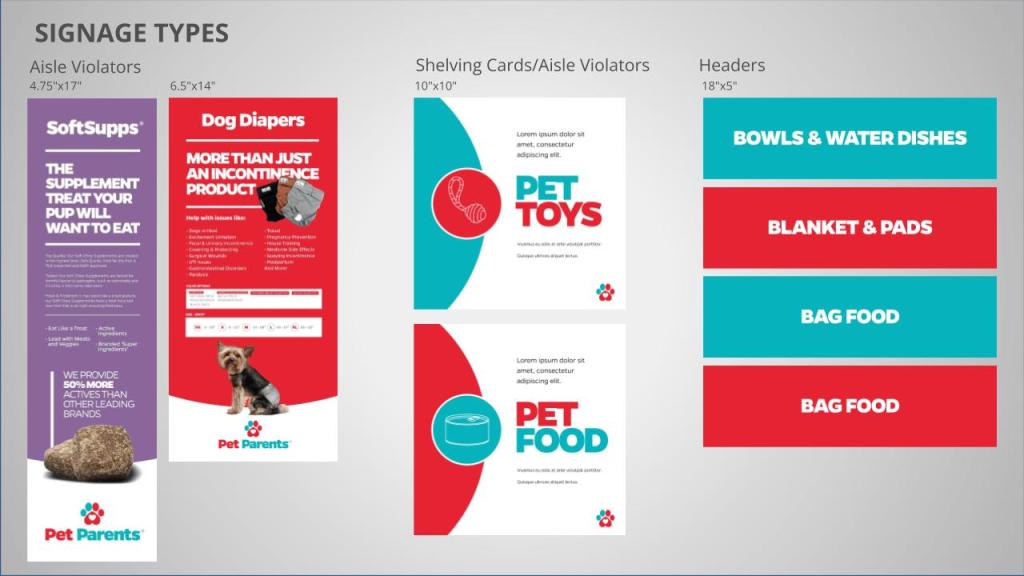
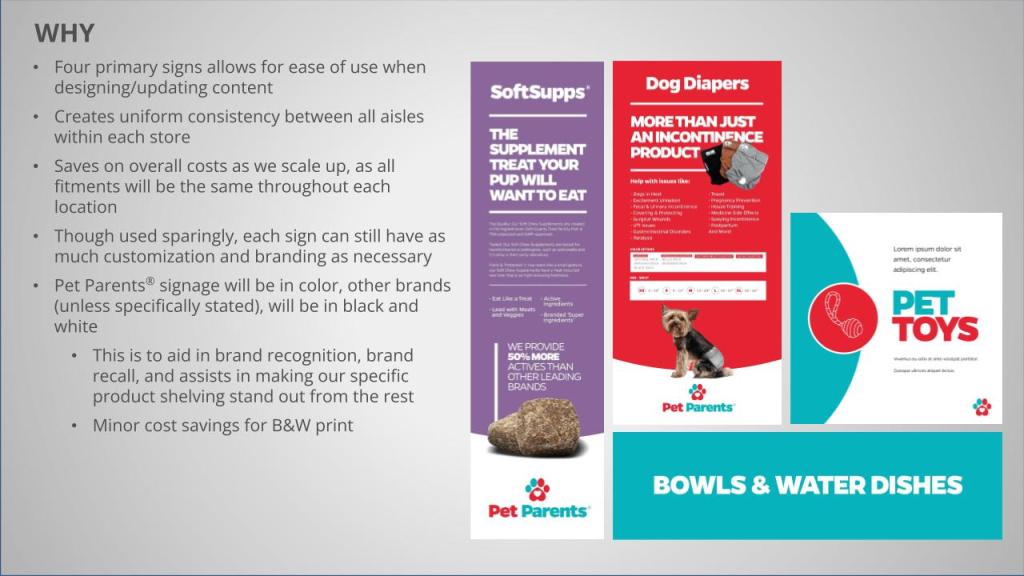
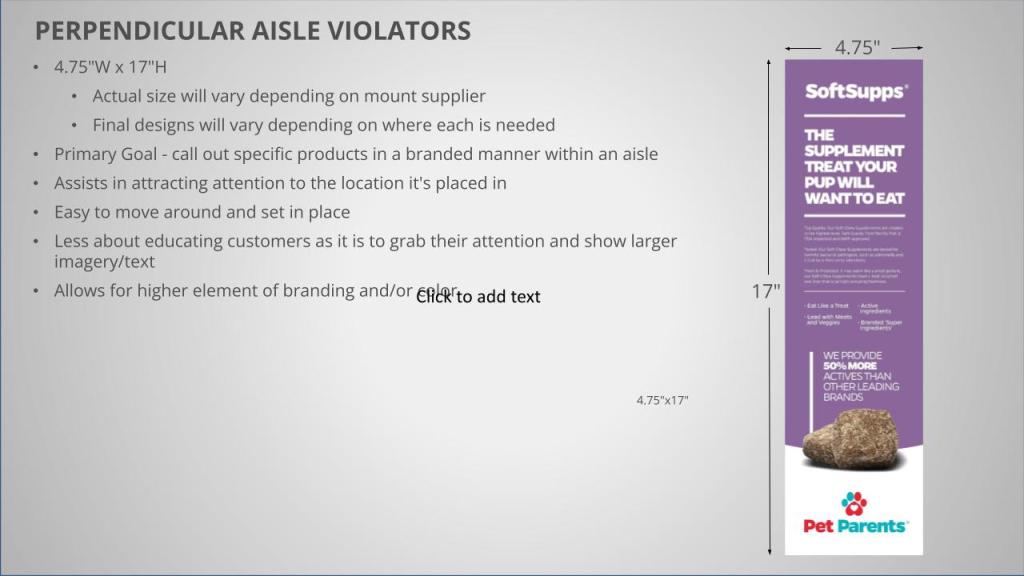
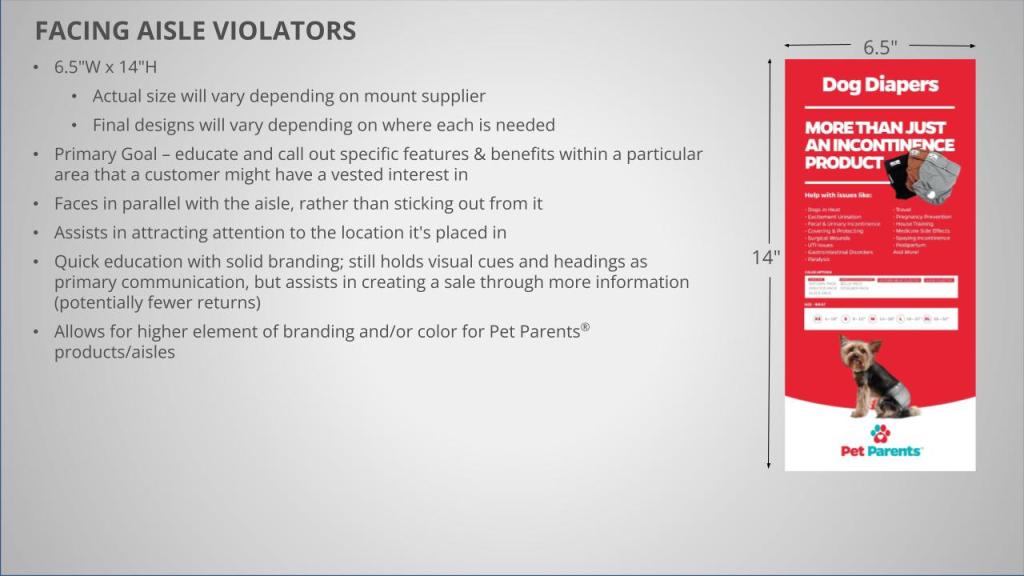
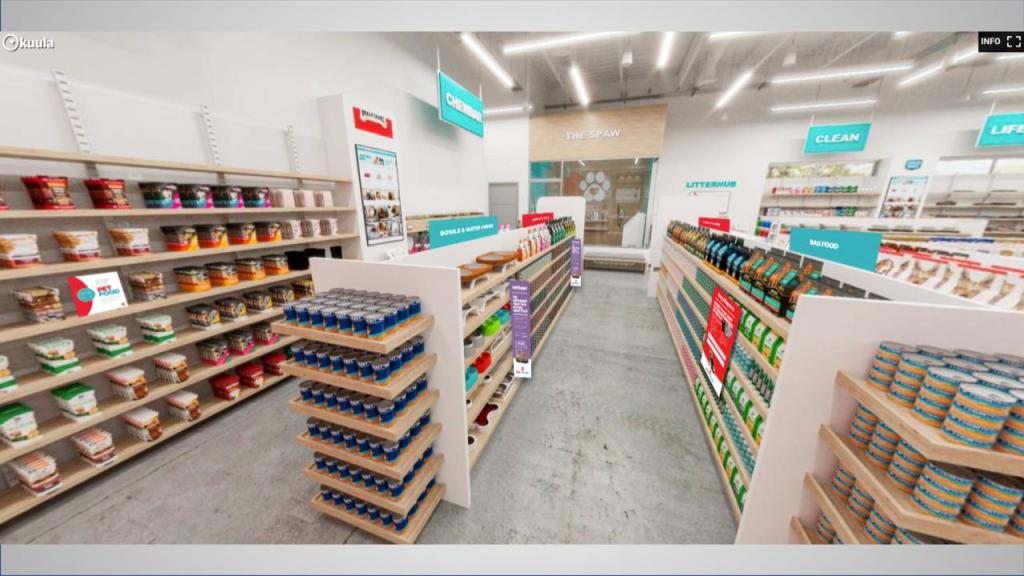
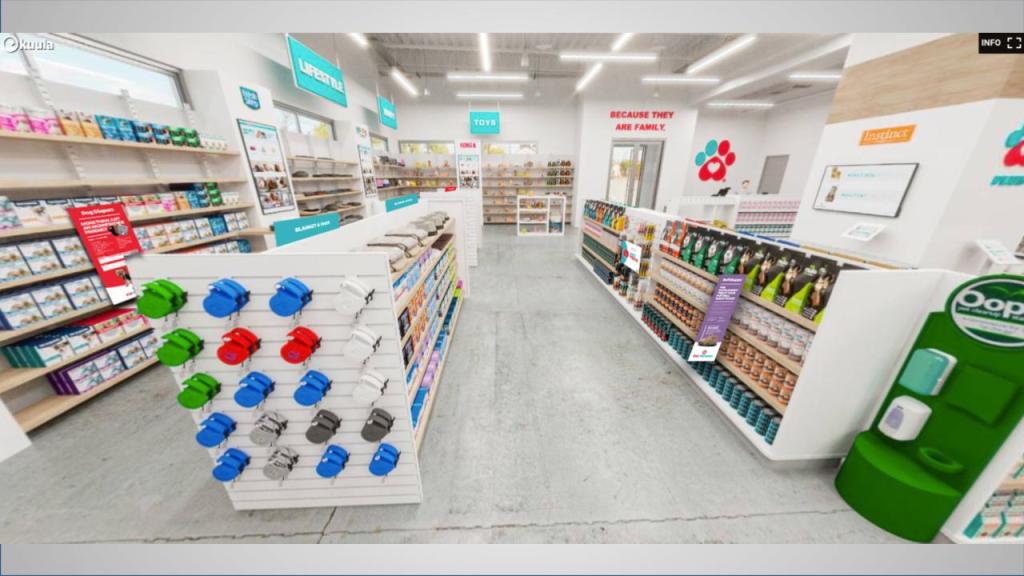
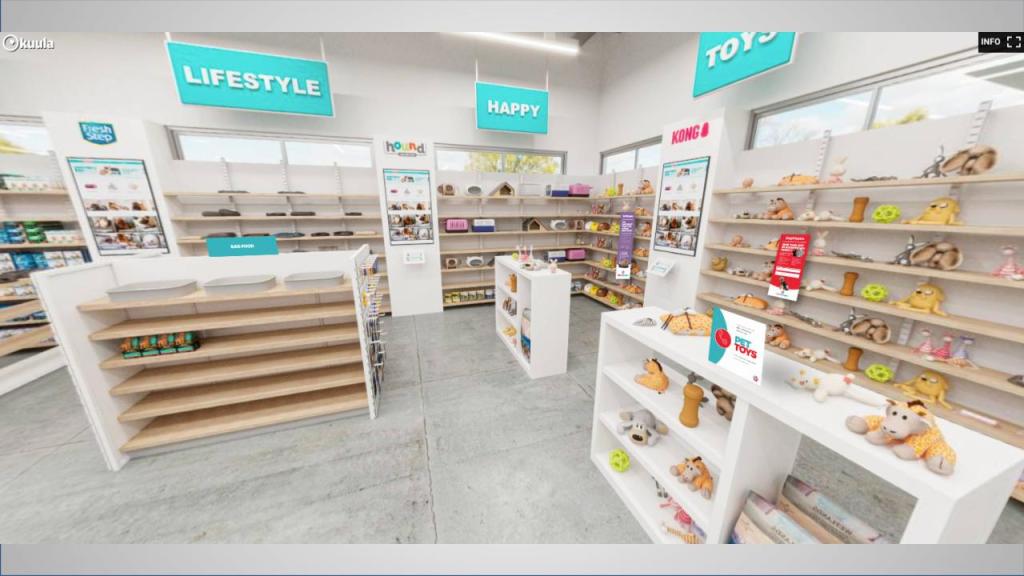
Our internal marketing efforts were designed to be simple and informative. If the assets were not on a screen, their printed counterparts would be informative and sparing in quantity; enriching the location. We selected three specific types of signage: two Aisle violators, and one Shelving Card. Later in the process, we opted to remove the shelving headers and replace them with hanging signage instead. This would allow for an even more free-flowing store experience that would help create clear lines of sight toward any aisle or product, increasing the likelihood of secondary and tertiary impulse purchases. A vast majority of marketing was designed to be done digitally through SMS, email, digital displays, tablet interaction, and website interaction. Aisle violators and cards were simply a method to help justify the impulse or help sway the guest into purchasing what we wanted them to by means of information.
Perpendicular and facing aisle violators would be available to any vetted supplier/distributor wishing to partner with the store, giving them access to an agreed-upon amount of space and signage assets (aisle violators, shelving cards, display marketing, floor graphics, and more).
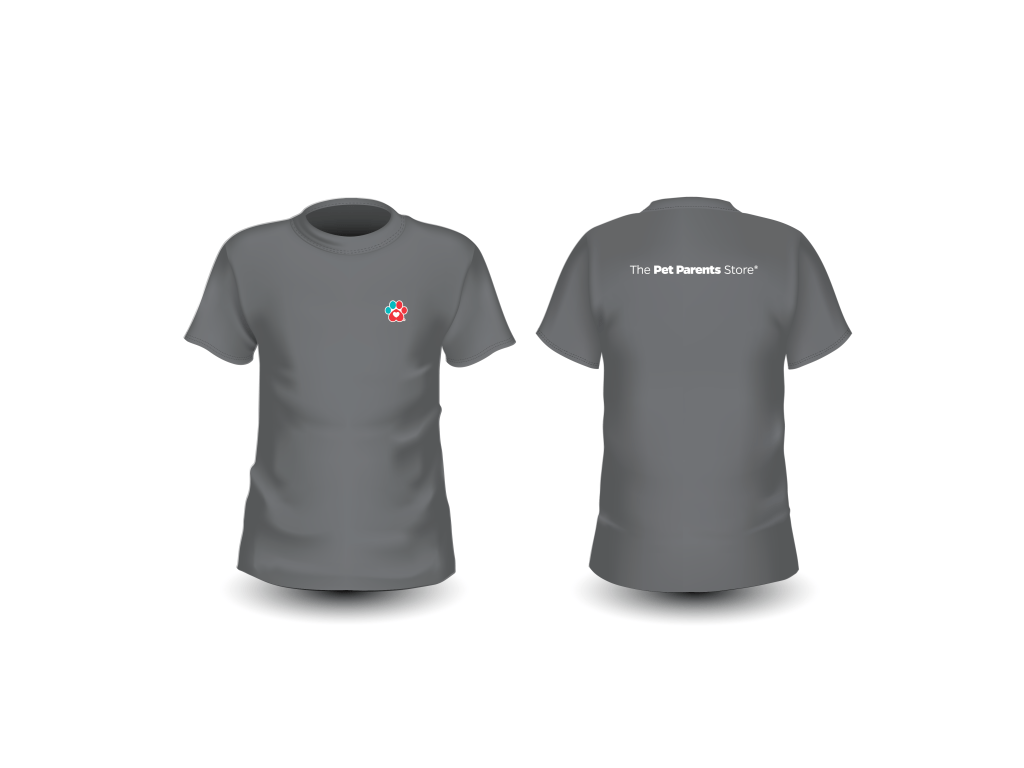
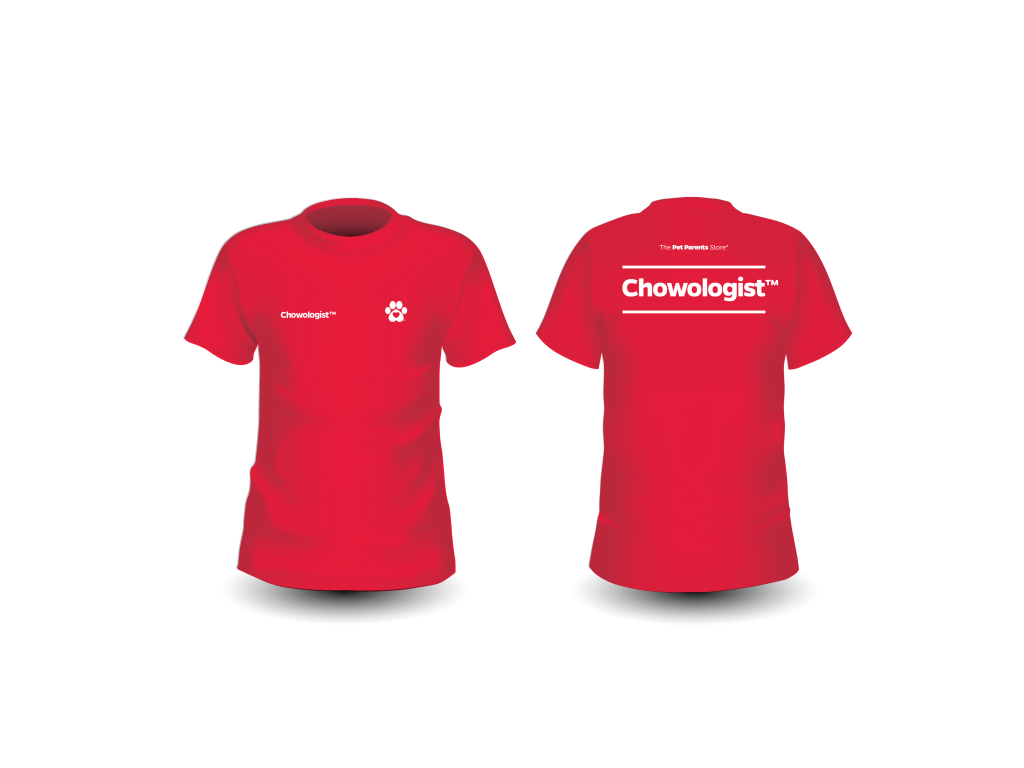
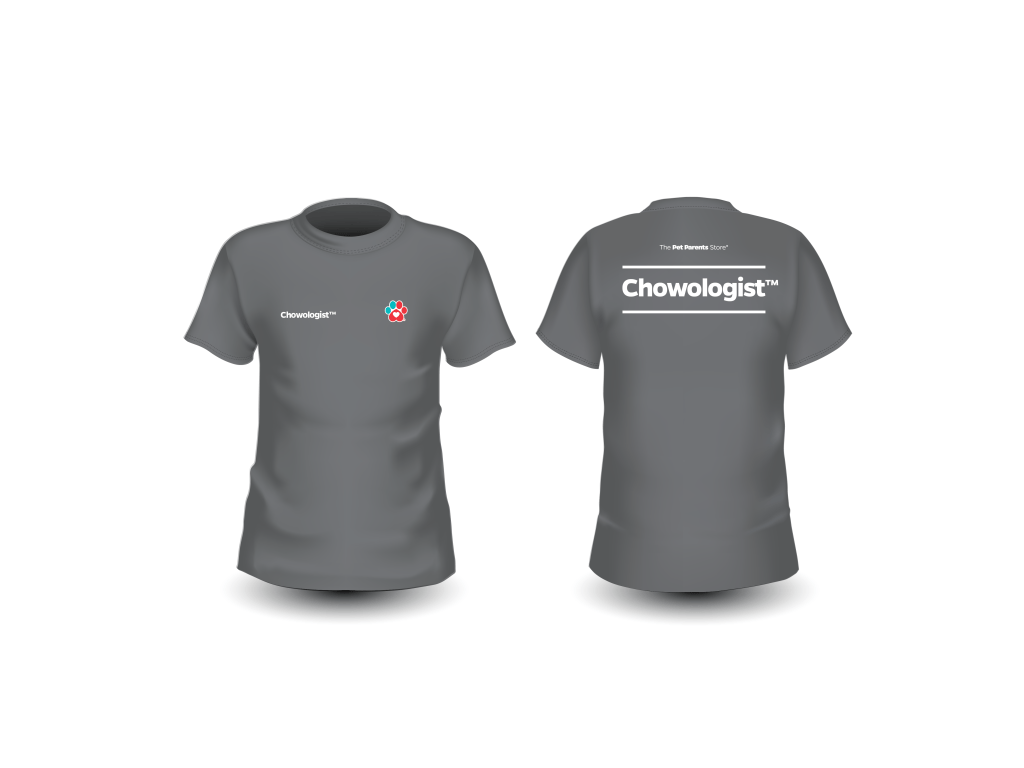
BRANDING – SHIRTS
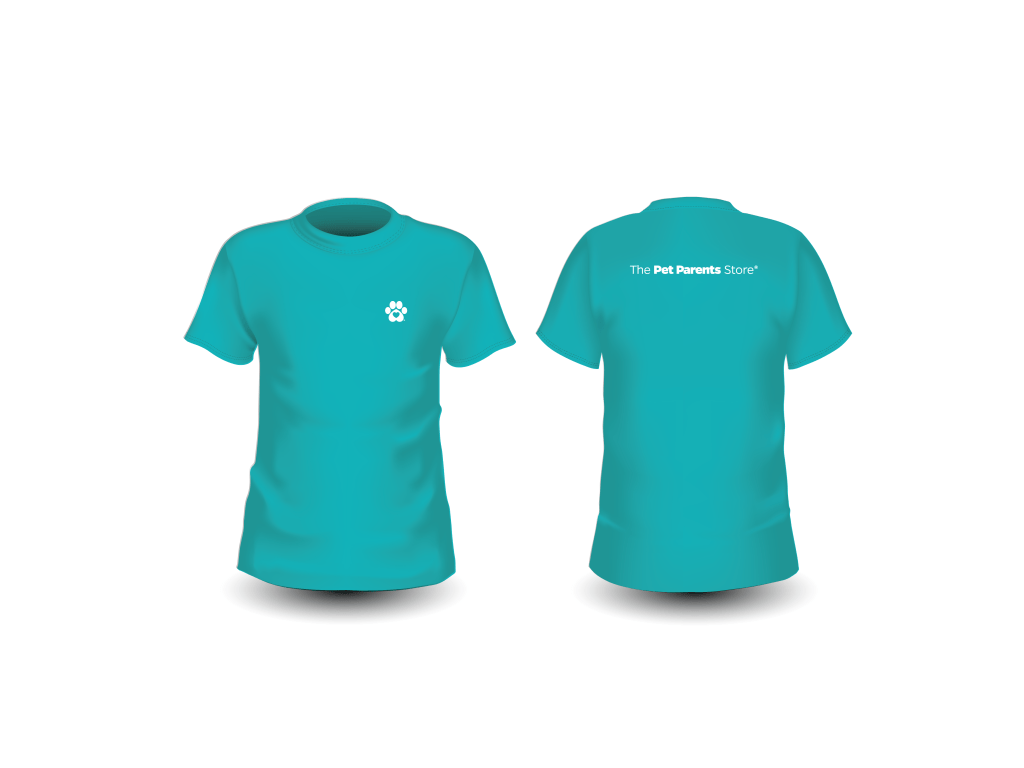
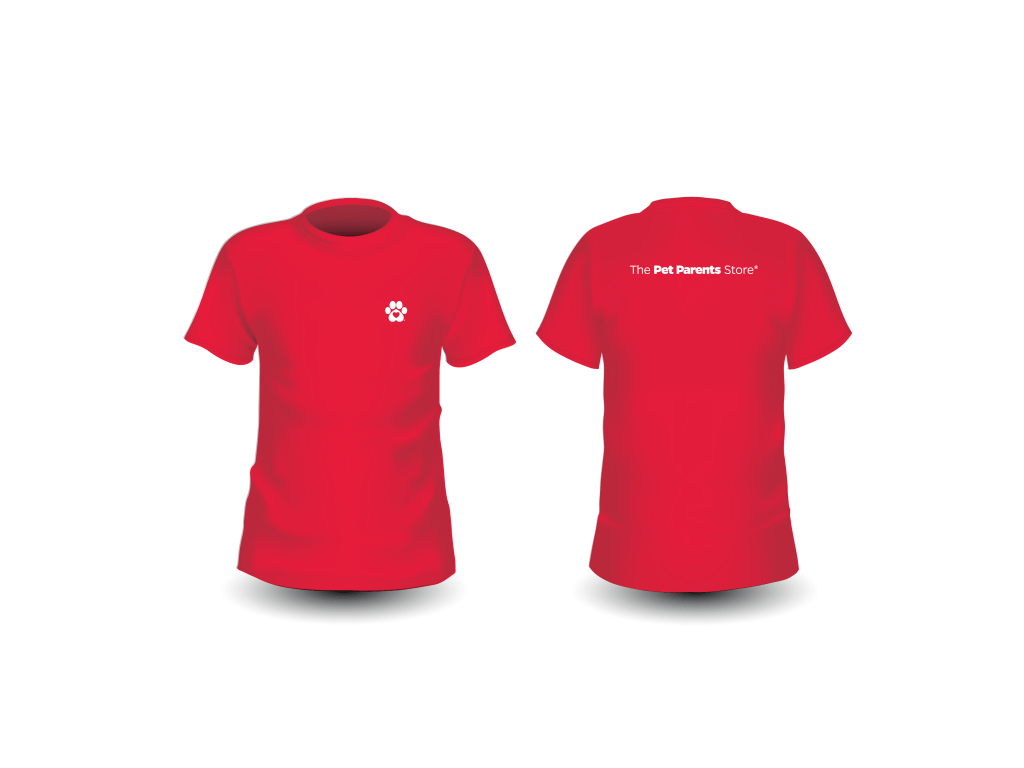
The owner was deadset on using simple t-shirts with store branding for their respective colors. This was to help create a more relaxed and less corporate look to show that we’re simply enthusiastic pet owners who are here to help each guest find the best product for their needs. With that premise in mind, we came up with a set of shirts utilizing the branded colors of the company and store, while still having unique elements to help distinguish others by their duties. Two particular positions required different needs and labels while still adhering to brand standards, so we worked with our graphic designer to give him our needs. After about three iterations, we found a set that we all liked and was wonderfully representative of the brand.
Not only did we satiate the need for quality branding and delineation between staff, but we also developed a pattern of when each group would wear their shirts to help save on costs. Specific to each title, we designated a specific set of shirts to our more specialized position(s) within the store.
SOPs – “University” Courses
As the store began to take shape, we started to transition into shoring up our digital infrastructure for the staff. A very large portion of this was shaped around “university” classes where each employee could learn and take tests, and thus earn more pay and become a candidate for any promotions. Courses were essentially SOPs designed and segmented by the need of each position’s expected duties. In “basic” courses (i.e. Point of Sale Software 101), employees would read about our policies, watch videos, and then begin to shadow other employees on how to use the system. To keep people from completely passing out from boredom, each course was kept as small as possible so that progress could be made.
Courses in 201 or higher became more nuanced, focusing on things such as what to look for in dog behavior that might hint of an overly aggressive dog, closing procedures, how to break up dogs that might be fighting, procedures and processes at our sampling bar, and how the store’s floor functioned not only as a store but as a warehouse. The list goes on. And when I say “… it goes on”, I mean the courses span over 200 different topics.
(Examples cannot be disclosed at this time.)
WEBSITE(S)
My focus was to help develop the initial drafts/wires for at least two sites. One site was dedicated to resellers “Pawtners”, who wished to buy in bulk, receive assistance with orders, etc. This site was less flashy, more direct in displaying popular or upcoming products, and focused on building accounts. The goal for this site was to help shore up Partners who wanted to buy directly from us, rather than relying on large retailers to buy in higher quantities. Or rather, we understood that the value and larger margin came through direct purchases from small stores nationwide rather than having to haggle and barter with a massive box store that is trying to undercut at all costs.
The second site was fully oriented towards retail. Not only was it designed as a customer-facing space for purchases, it was also slated to be the central hub for placing online orders, scheduling times for special events/tastings, selecting times for grooming, and becoming the main location for all product rankings and queries for internal and external-facing assets, including the customer app. This too had to be ideated by myself and explained to all teams as to how the integration will work when the company begins to scale upwards.
Both sites and their respective assets required considerable work. Once the initial goals were met, I was then tasked with auditing all digital assets to better define the desires of the team and company, as well as evaluate functionality on both the front-end and admin side of the app and site(s). The audit itself took about two to three days, eventually producing a seven-page document of findings released to the owner and dev team. Our dev team was overseas in India, so it was imperative the audit be written concisely and with examples to help illustrate a point or idea. Of course, I was available early in the morning or later at night to help give the dev team the time they deserved and answer any questions or provide any insight/assistance with (practically) anything on the development side.
(Examples cannot be disclosed at this time.)
Headquarters
The HQ was a bit of a difficulty in that a lot of what I was tasked with was already decided on and being built, or already purchased without fully understanding the needs of the building and/or hardware itself. Each task was an intense learning experience, and the more I learned, the more I had questions and needed to gain a better understanding. Eventually, I was able to get down to the fundamental understanding of each task, situation, and “why” within the construction/installation field. By no means was it an easy task, but I absolutely love learning, and what I learned in that stint will help me for the rest of my life. The details aren’t as flashy, but I certainly think a list of various challenges and tasks would be helpful in illustrating the variety of taskings.
- Conferencing
- Finding a way to integrate Apple TV, Logitech Rally Plus, and Mac presentation abilities in one seamless system, along side the need to have it function with Microsoft features/assets
- Cable routing that wasn’t properly executed due to a misunderstanding of conference system needs and functionality; required a plan to update routing and routing
- Drainage Solutions
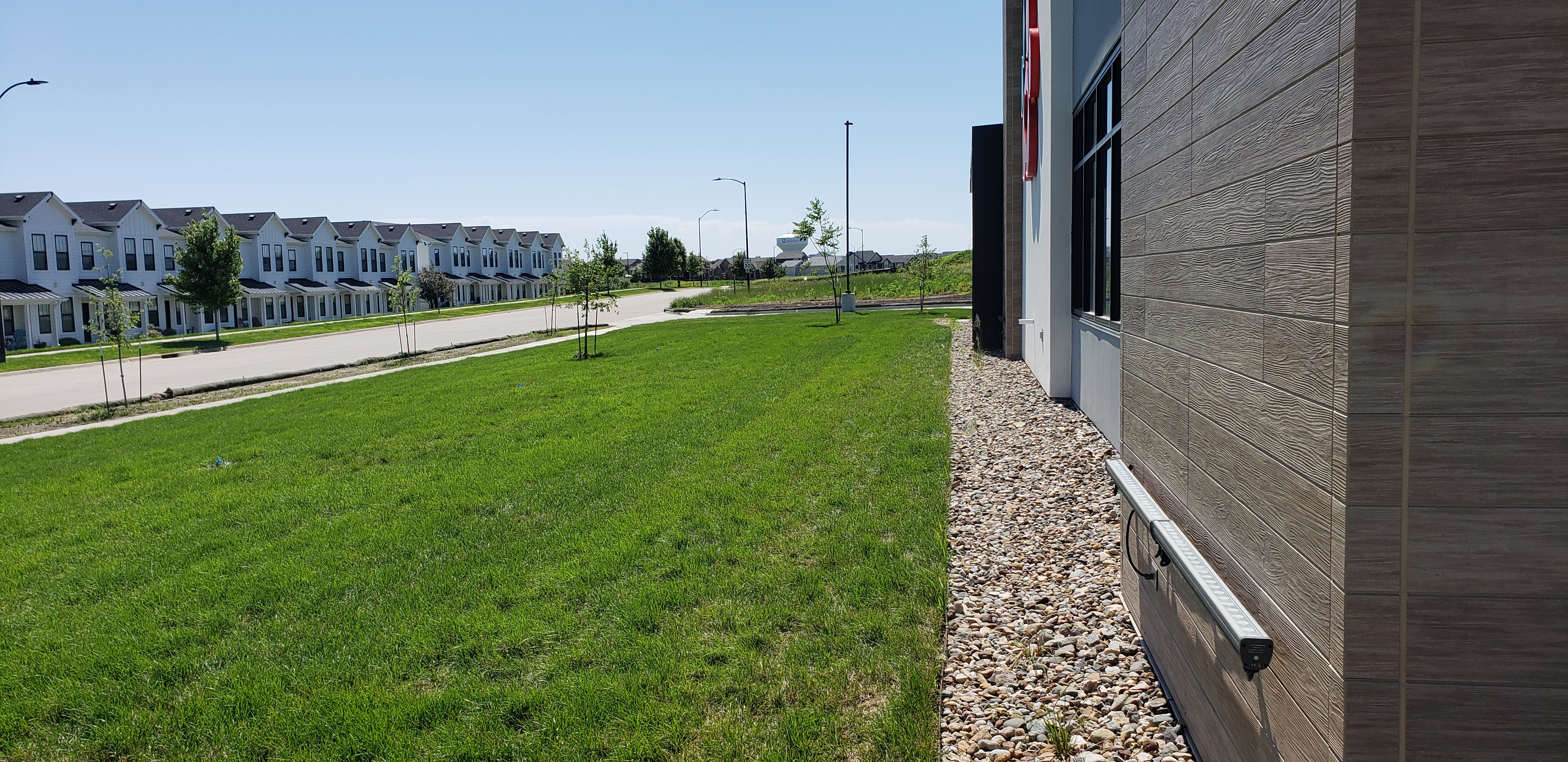
- Being told that at one point there was a capped drain directly under the dog park that had already been made, and requiring solutions to reroute or offset the draining point
- Landscaping
- Understanding the difference between Saud and Seed, and how to properly care for each
- Learning about irrigation systems and what to do in emergency situations, seasonal prep, and setting specific variables within the irrigation system
- Internal SOPs
- From how to use and clean a coffee maker, to how to use and troubleshoot the conferencing system, if you could write about it, I made an SOP for it. This also included quizzes after specific SOPs
- Sound Systems
- The HQ had noise-generating speakers, but required significant troubleshooting and learning the system that controlled it in the server room
- Creating a solution and using Spotify services and hardware requirements to prep both the store and HQ for audio
 Alex Wishard
Leave a comment